Why the World Cup Matters: For fans, brands, and the everyday game
World Cup fever is upon us. The FIFA World Cup 2026 is poised to be the biggest global soccer event of the decade. For the first time, it will be hosted in multiple nations in North America together with 106 matches against 46 teams played in 16 cities across Mexico, the United States, and Canada. Billions of dollars will be spent, and billions of global viewers will watch, cheer, and celebrate. It’s a unique moment where the globe will come together for the World’s Game.
The growth of soccer’s popularity in North America has been decades in the making, and hosting the World Cup 2026 will be the culmination of years of effort. Five new Major League Soccer teams have been established and started play in just the last five years. Local teams are on the rise, and Canada has also launched its own premiere league. The cultural soccer zeitgeist can be seen in the popularity of Ted Lasso, brand collaborations like Puma × AC Milan × Off-White™, and Messi and Beckham elevating Inter Miami FC to a global audience. As soccer’s influence continues to surge, 2026 is North America’s moment to take international soccer’s center stage.
Global, Local, and Uniquely Individual
Next year the World Cup will bring together the hyper global, hyper local, and hyper personal. Growing up, before you play your first game or put on your first jersey, soccer is already deeply personal. For kids across the world, soccer is the sport where they first learn to work as a team. Local leagues introduce us to our larger communities, and we begin to understand the principles of self worth, sportsmanship, healthy competition, and gratitude. Our moral foundations and self image are built through each pass, volley, and kick. Like our own handwriting, the way each of us learn to play is deeply unique to us: Just you and the ball.
There is also something singular to each team and town in which cultural identity is channeled through soccer, speaking a unique local vernacular while maintaining a universal and global appeal. This kind of authentic connection between person, community, and sport is a special kind of art form. Home town soccer teams tap into the unique DNA of history and place. Players and fans channel this secret recipe to reflect local culture, attitude, and pride.
Elevating the Game
This will be the first World Cup in the age of AI’s full maturity, making it the most innovative tournament in history—both online and on the ground. For the first time, AI will be fully integrated into the fan experience, enabling real-time personalization that goes beyond the traditional marketing of the past. Fans will see themselves composited into team jerseys, interact with branded AI agents that deliver insights, and share meme-worthy augmented content across social feeds.
Equally groundbreaking will be the technological advancements since the 2022 Qatar World Cup for how data is captured across gameplay. Video Assisted Referees (VAR) and limb tracking, connected ball to track telemetry, along with conditioning technology to understand players’ strengths and weaknesses will get even better and more sophisticated. In 2026 we will see how advancements in AI over the last four years have impacted FIFA’s Football Data Ecosystem that collects, processes, and distributes data to teams, broadcasters, and players. This will serve as a new benchmark for how real time data capture, AI, and the data pipeline will be leveraged to give everyone more depth and insight. On the ground, we will see physical watch parties and fan zones go to another level augmented by AI with even more immersive live experiences that bring together LED walls, tracking, real time data, and generative art.
What does this mean for brands and fans? All of this data and tech cannot and should not overshadow the love of the game. At its foundation, soccer is about emotion, a shared collective experience, and physical connection to the games, teams, players, sponsors, and fans. For brands, authentic engagement happens where the fans are, on and off the field. It is about developing a longer and more in-depth commitment to support soccer at the local level now and for years to come. Our friends at Soccer.com know this well and have worked to become a trusted brand for local teams nationwide and an invaluable partner for the best soccer brands around the globe. They support every player and through a deeper and enduring love of the game they’ve built a brand that is foundational.
“Our club is a reflection of our community. Our crest is a reflection of our club. We created this together. And what we created – like the Sounders – is eternally yours.”
— Seattle Sounders FC


Spotlight on Seattle Sounders FC
For the 2026 World Cup, Seattle will host six matches over the course of the tournament including four group stage matches and two knockout stage matches. All of the matches in Seattle will be played at Lumen Field though during the tournament it will temporarily be renamed “Seattle Stadium” due to FIFA’s rules on stadium naming rights. Aside from just hosting matches, Seattle is planning for the tournament to leave a lasting legacy, including efforts around accessibility, human rights, sustainability, culture, and working with local community organizations.
Find our more on FIFA and Seattle during the World Cup
On the eve of their 50th anniversary, the Seattle Sounders embarked on a journey to re-examine their brand identity, from positioning to color palette to crest, and asked Athletics to help.
Learn more about our strategy and brand journey with Seattle Sounders FC
Soccer's Unifying Spirit.
For fans, the real World Cup happens every day in the streets, parks, and local pitches in every borough and neighborhood. Fandom is built one game at a time and is a unique story for each person and team, no matter the size or makeup of the league. For the World Cup 2026, we will see local soccer stories get elevated to a global stage while the games will connect cities from Vancouver to Mexico City in ways we’ve never experienced before.
The World Cup embodies the best part of us as one global village and our ability to come together despite our differences. When you put a soccer ball on the ground we all understand, it speak its common language, and connects on a human level.
The final whistle in July of 2026 will mark a new beginning for soccer in North America. Soccer fandom, culture, and infrastructure will reach a new level of cultural momentum. For brands, authentic strategy is found on the street when the fans are the players and vice versa. As a creative studio, at Athletics Soccer is in our bones and the air we breathe. It’s a larger reflection of what we believe – everyone on the team shooting for the same goal.
Athletics has had the incredible fortune to work to help build soccer brands that we love – Major League Soccer, MLS Go, Nashville SC, and the Seattle Sounders along with Nike and others. What we have learned along the way is that soccer is a special kind of game. It is the only truly global sport, recognized and played in every nation and neighborhood, where local passions and brand loyalty flourish and thrive.
Further Reading
Athletics’ Executive Creative Director and partner Malcolm Buick writes “Beyond the Pitch: Designing brand experiences that unite fans for the 2026 World Cup and Beyond” for Sports Business Journal. Read it here.
Support local soccer in North America with MLS GO, creating an inclusive and elevated recreational experience for all kids. Learn more here.
Landmark innovations at FIFA Club World Cup™ to enhance fan experience, transparency and operations. Read more here.
Scarf illustrations by Dan Funderburgh
“For forward-thinking brands, the World’s Game will redefine how we engage audiences and amplify customer value, and through it, our relationship to each other as nations and communities. It’s a moment as exciting as the next penalty, with winners and losers on and off the pitch.”
Malcolm Buick, ECD and partner at Athletics. Beyond the Pitch for Sports Business Journal




Spotlight on Major League Soccer
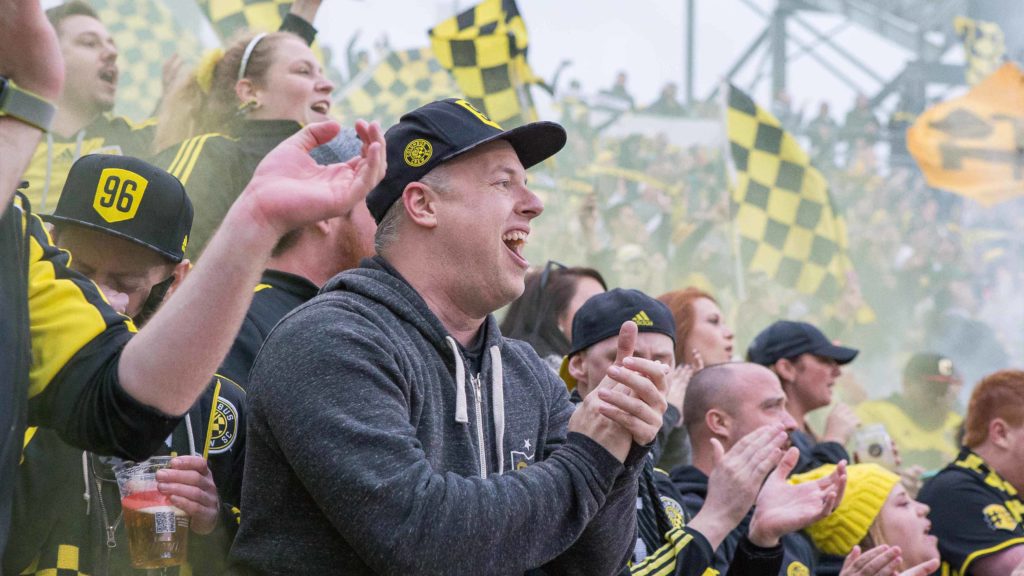
Major League Soccer (MLS) will play a supporting but meaningful role in the 2026 FIFA World Cup. The league will pause during the tournament (June 11 to July 19, 2026) so its clubs aren’t missing key players. Many MLS markets are also World Cup host cities—13 in fact—meaning local clubs and fans will be deeply involved through stadium hosting, fan engagement, and legacy efforts. Additionally, several MLS players are expected to represent their national teams during the tournament, raising the visibility of the league on the global stage.
Don Garber & US Soccer’s Cindy Parlow Cone on FIFA World Cup 26 & the MLS