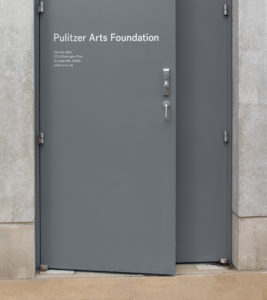
Pulitzer Arts Foundation
Dialogue of Art and Space

The Pulitzer Arts Foundation was founded by Joseph and Emily Pulitzer III and designed by architectural luminary Tadao Ando. With rotating exhibitions that span from old masters to contemporary art, Pulitzer Arts always seeks to elevate personal and collective communion with its collection. Athletics worked with the Foundation to craft an open visual identity that spans printed materials, signage, and digital experiences. The identity is faithful to the Pulitzer Arts Foundation’s open-for-interpretation approach to curation.
Our Role:
Brand Writing
Physical Environments and Exhibitions
Web Design and Development

Creating a singular space
Pulitzer Arts offers a unique curatorial approach. With no wall text or stanchions, they seek to evoke the experience of experiencing art “as if viewing it in your own home.” Tadao Ando’s first public building in North America, the space illustrates Ando’s attention to the elements—specifically light and water—and his signature use of concrete, poured in place over an exacting, four-year process. In addition, Ando collaborated with artists Ellsworth Kelly and Richard Serra to conceive and install the Pulitzer’s three permanent interior works. The overall experience has been described as a sanctuary-like, “serene setting for contemplation of art.”
In 2018 the Foundation was nominated for a Webby in the Mobile Sites & Apps category for Cultural Institutions.
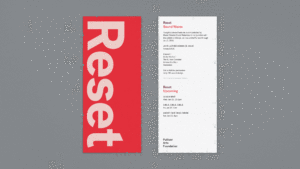

Nothing stands between art and viewer
Inspired by the museum’s unorthodox union of art, space, and culture, the brand identity Athletics designed never detracts from the unmediated experience of communing with the Foundation’s outstanding collection and rotating exhibits. With minimalist typography, a monochromatic color palette, and strategic use of negative space, the brand perfectly reflects the purity of the Pulitzer Arts Foundation experience. The brand culminated in a renewed digital experience, designed and developed by the Athletics team.



“Athletics helped build a site that was easy for us to manage and maintain, thinking long term and creating a framework that would adapt as the Museum grew and changed.”
— Stephen Hayes, former Digital Media Coordinator, Pulitzer Arts Foundation